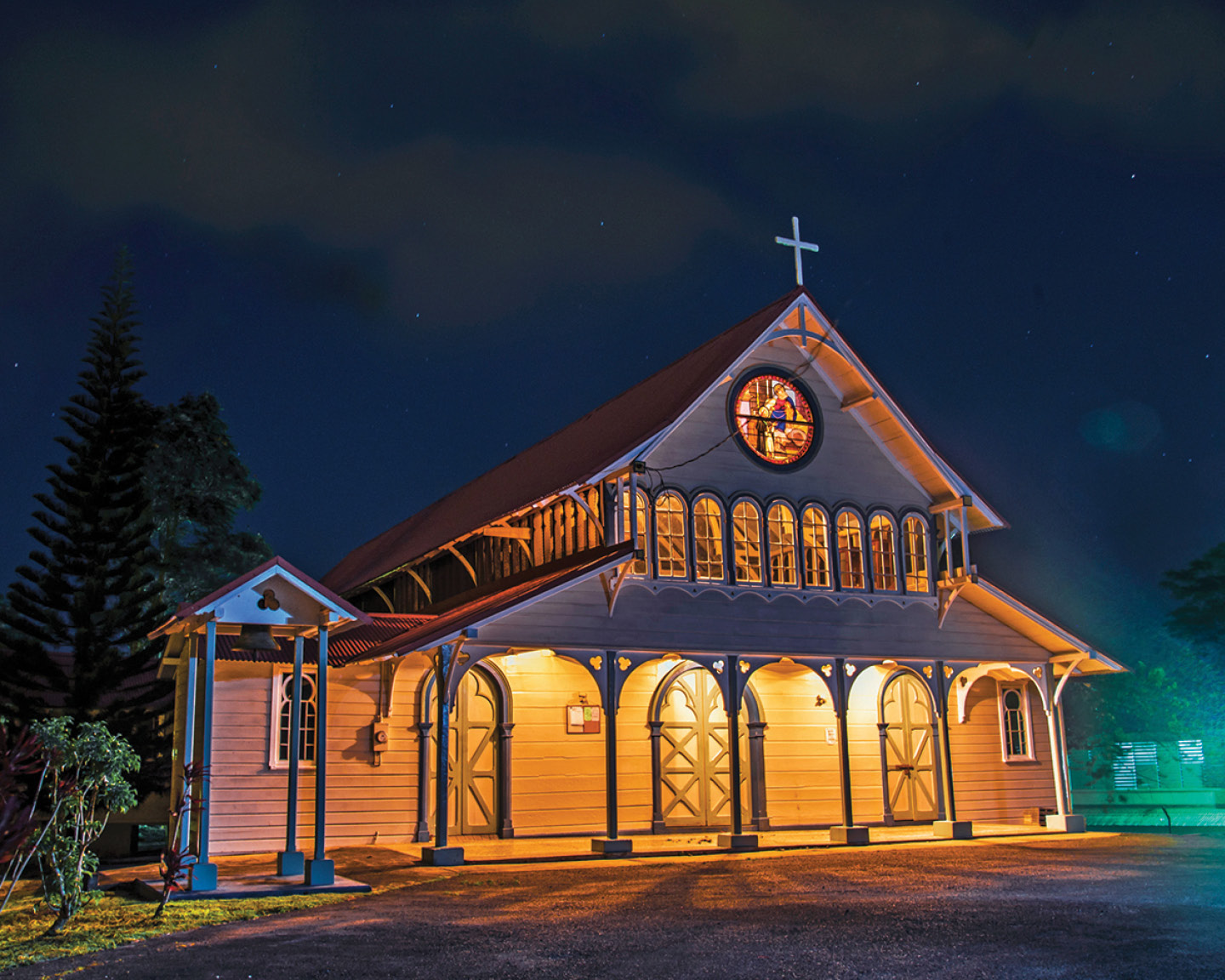
Header photo: Tortuga Catholic Church - Photo: Ghansham Mohammed
One of the hardest things about vacationing in Trinidad is making up your mind about which of our stunning sites to visit next. So many choices! By the end of your stay, you’ll probably come to accept the fact that one visit is never enough, but that’s okay. On you return trip, we’ll still be here to welcome you back with open arms. In the meantime, allow us to suggest a few must-see stops on your fantastic journey across the length and breadth of this beautiful gem of an island.
.avif)
Fort George
One of the grandest views of the capital city is from Fort George, in the hills of St. James. That’s only to be expected, considering that it was erected by the British at the turn of the 19th century as a defence against the threat of invasion by the French … because who wouldn’t want to protect such a valuable, resource-rich territory against all comers?
Forbidding canons still point toward the Gulf of Paria, once a bone of contention between European powers, now a sparkling expanse of water that makes the perfect backdrop for holiday portraits.
.avif)
The La Vigie Paramin Lookout
The tiny village of Paramin isn’t just about Parang. There are also the gorgeous views of the north coast, where the intensity of colour … blues, greens, dazzling whites … almost make you ache.
Paramin is perfect for a picnic and a photo-op. Keep an eye open for vendors, who will be eager to sell you some of the region’s legendary fresh green seasonings for that perfect Trini-style cook-up.
.avif)
Sri Dattatreya Yoga Centre
As you head into the central plains, you’ll find more places of interest. Stop off in Chaguanas for a unique street shopping experience, then keep going to Carapichaima, to the Sri Dattatreya Yoga Centre. The meticulously kept grounds are a backdrop for the majestic example of southern Dravidian architecture that will seize your breath.
Towering above the grass-lined paths is the 85-foot-tall statue of Hanuman, ably guarded by two exquisitely carved elephants. You’ll sense at once that you are on sacred ground. Breathe in its aura, focus on your chakras, and let the light in.
.avif)
Botanic Gardens and the President’s House
If your purpose on this trip is to relax, there’s no better place to start than the Royal Botanic Gardens. Located barely a kilometre or two from the throbbing city centre of Port of Spain, these gardens are more than a hundred years old and feature hectares of carefully curated tropical species of trees and ornamental plants. The winding paths lead to nooks and crannies where you can sit, meditate, picnic, or cool down with a snow-cone, all in the shadow of the majestic Victorian-style President’s House.
Central Bank Museum
A museum? In a bank? Not so odd when you consider that it’s home to an expansive numismatic collection featuring coins and bills from throughout the island’s history. Art by renown local artists grace the walls, making it well worth a visit.
Oh, and the Central Bank Auditorium is a great place to catch a concert or a play, so browse the listings to see what’s on.
Carnival Museum
Missed Carnival? That’s okay. You can still witness the glory of Mas at the Carnival Museum in Port of Spain. Here, you’ll find multimedia displays of Carnival dating back to its earlies origins, as well as examples of traditional and modern costumes. It’s a feast of colour for the eyes, and a great crash course into our nation’s best-known festival.
.avif)
Monseratt Hills
The drive to the eastern Monseratt Hills at the nexus of Couva, Tabaquite and Talparo is its own adventure, winding through tiny villages that are the legacy of historical sugar, cocoa and coffee industries.
The hills themselves are lush and unspoiled. Take a moment to close your eyes and imagine yourself 200 years in the past, when the smell of roasting coffee and cocoa infused the air as horse-drawn carriages thundered by.
Be sure to visit the legendary Lady of Monseratt Church, one of the oldest Roman Catholic churches in the country. Within its shrine, a serene Black Madonna embraces her infant son as they await their supplicants. Throughout the year, pilgrims visit to plead their case, seeking their intervention in their quest for a baby, a spouse, a return to health, prosperity, peace and hope.
Tamana Caves
The Tamana Caves near the eastern town of Sangre Grande were once sacred to the island’s Indigenous peoples. Now, they’re a marvel to biologists and nature-lovers who flock to them to observe natural wonders in their habitat.
More than 60 species of bat call the caves home, and the image of them rising out of the cave mouths to swarm into the air at sunset is a sight you’ll never forget. But don’t worry … they’d rather avoid you than harm you.
Hire a competent guide, kit up and embark upon an adventure into the woods, passing coffee estates and fertile fields before you plunge into the mysterious mountainside.
.avif)
Aripo Savannahs
The Aripo Savannahs in the rolling foothills of the Northern Range are a teeming tropical eco-system. If the colour green soothes your soul, the Savannahs are Nature’s cathedral.
The surrounding marshes are bio-diverse and teeming with fish, frogs, toads, iguanas and other reptiles, while the plant life purifies the air and cools the environs, another reason this treasure is protected by the State.
.avif)
The Gasparee Caves
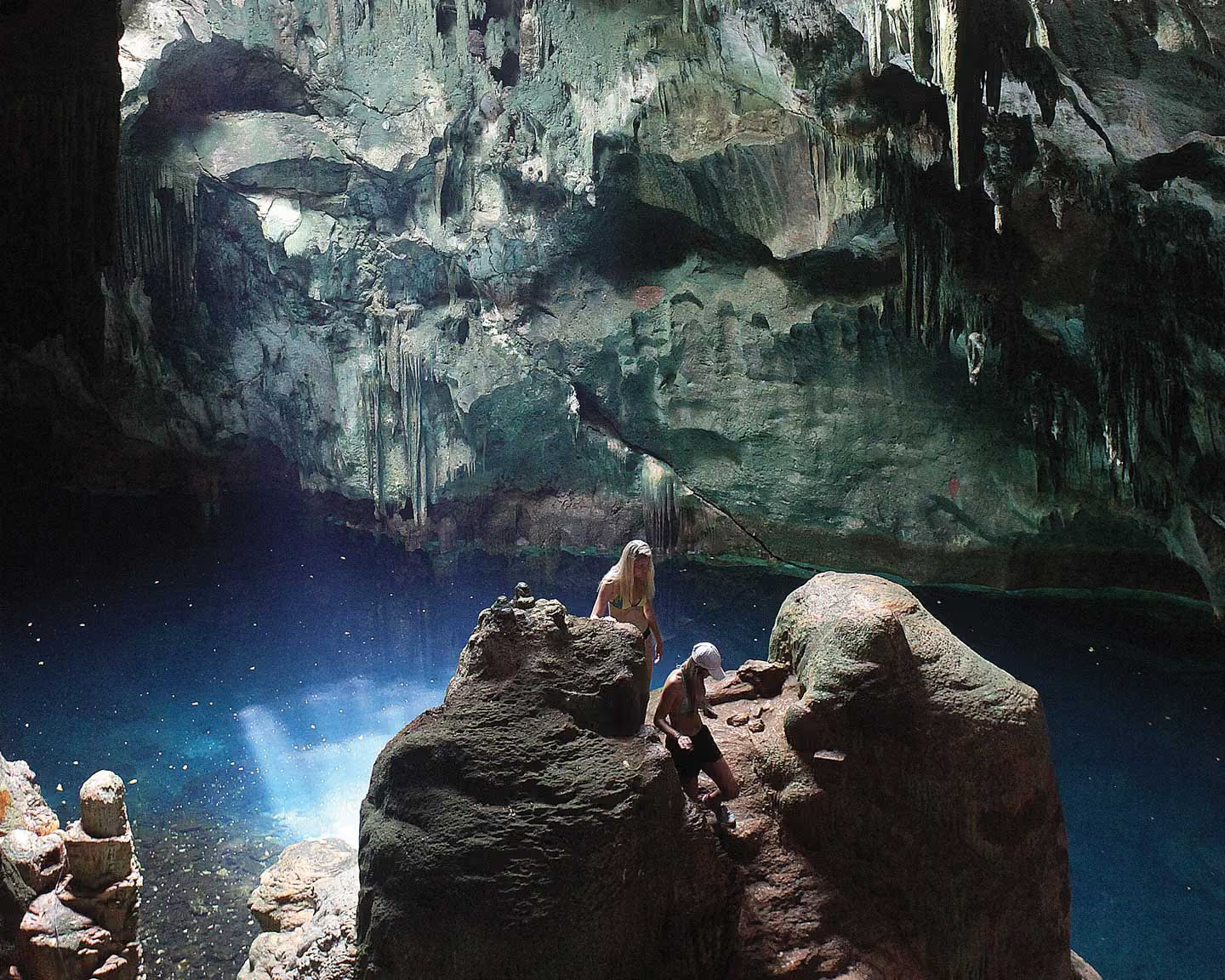
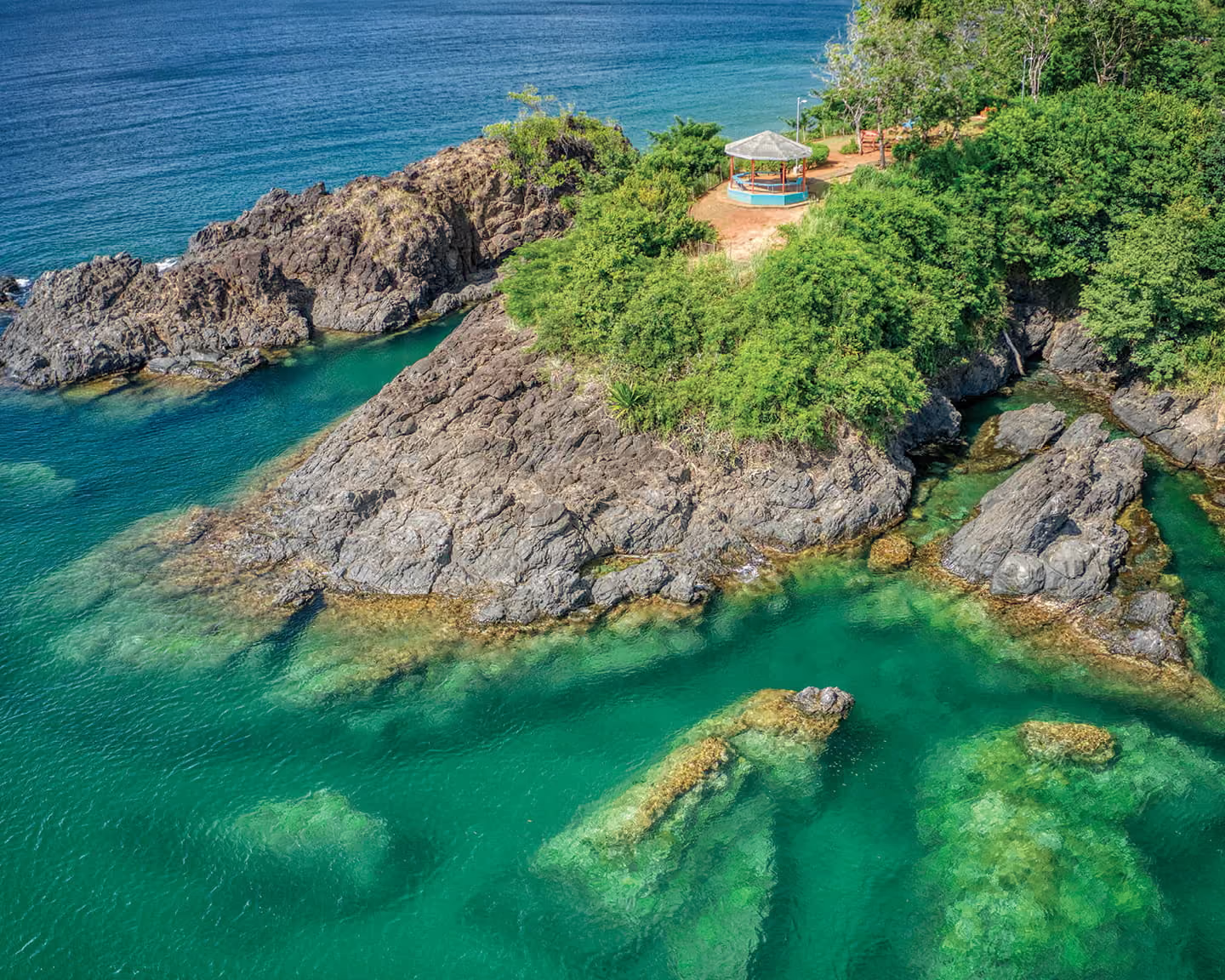
Have you got your sea legs on? Because the Gasparee Caves are only accessible by boat. Pre-book your tour through a trusted guide, and off you go to a tiny island off the north-west coast that’s so pure and unspoiled you’ll feel like you’ve been transported backward to a time where pirates buried treasure in the golden sands.
Walk through the echoing caves or plunge into the crystalline pools that glitter in the piercing shafts of sunlight. You just might spot Mama d’Leau, our legendary mermaid queen, because this is precisely the kind of place she chooses to bask in.
Don’t see her? No problem. The water is teeming with other fascinating species, such as fish, turtles, dolphins and stingrays. Innumerable types of birds flutter through the air, and the caves are home to lizards, frogs and other creatures that hop, creep and crawl as well as bats that feed on fish … yes, really!